Italy
Salento on the little regional train
Lecce, a sea that was still too cold, and a lot of olive trees that are no longer alive.
Salento is the heel of Italy’s boot, and it has a small railway, the Ferrovie del Sud Est, that connects most of the places worth going to at a speed best described as thoughtful. We went in mid-April, the week after Easter, when the sea is too cold for anything but looking, and spent a week in Lecce and the villages around it.
Lecce
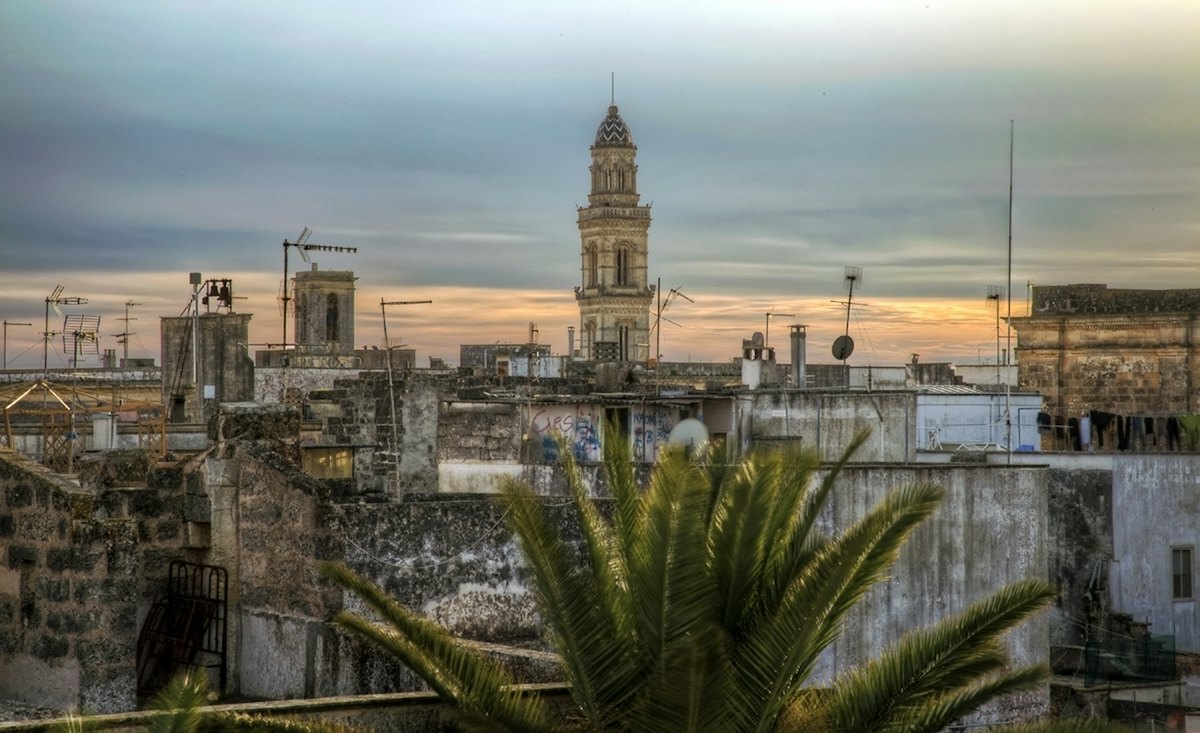
We paid €64 a night for a double in a B&B in the old town, up a stone stair and past a courtyard with a lemon tree. The baroque front of Santa Croce is the sort of thing you look at for ten minutes and then need a coffee. The coffee in Lecce is caffè leccese, espresso poured over ice with almond milk, €1.80 at the counter and €2.20 if you sit. A pasticciotto, the custard pastry, was €1.40 and came out of the oven while we watched. We had five in four days.
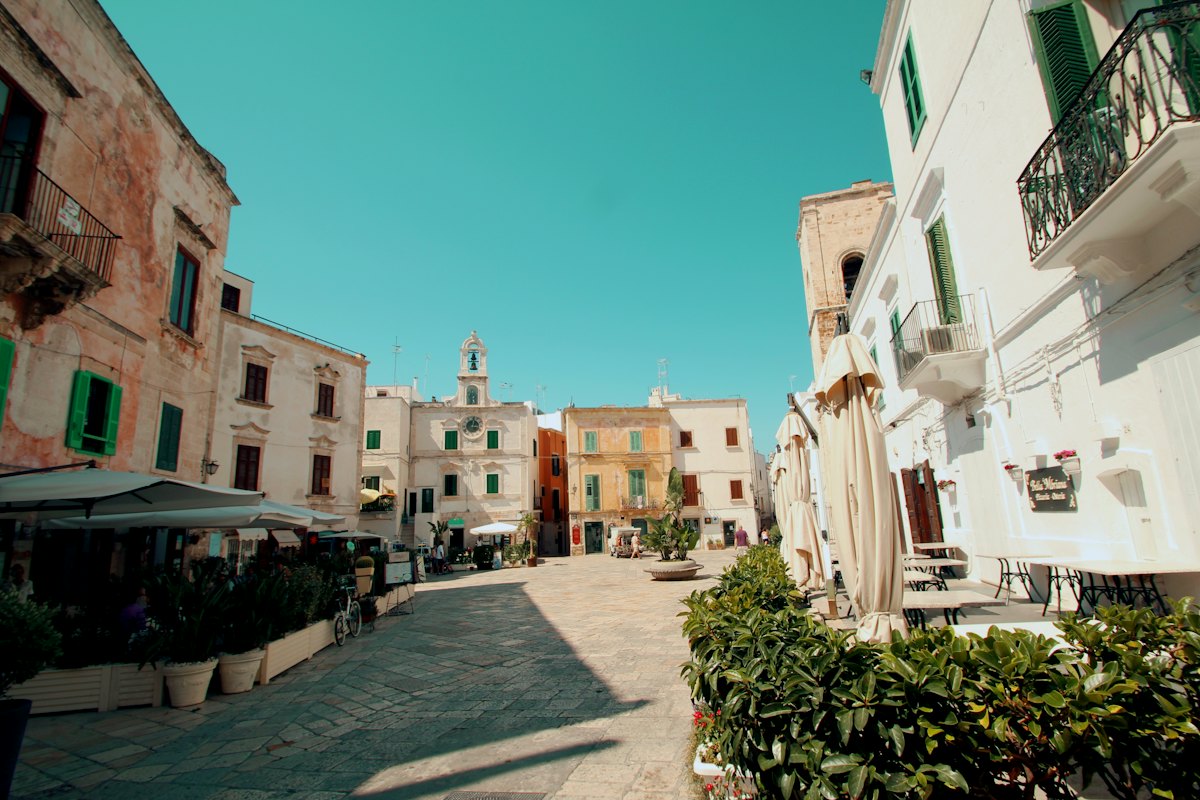
Between two and five on a weekday nothing is open, nothing at all, so lunch has to happen before. We learned this on the first day, at ten past two, outside a closed trattoria.
The trains
The FSE from Lecce to Otranto takes a little under two hours with a change at Zollino and costs less than €5. The trains are small, cheerful and usually fifteen minutes late. You are supposed to stamp your ticket in the machine on the platform. We forgot, twice, and the conductor sighed, wrote nothing down and moved on to the next carriage.
Otranto and the coast
Otranto is the one place here we would go back to in winter. The floor of the cathedral is a twelfth-century mosaic of the Tree of Life, with animals and kings in the branches. We ate orecchiette with turnip tops for €9 at a place with plastic chairs and a very good grandmother.
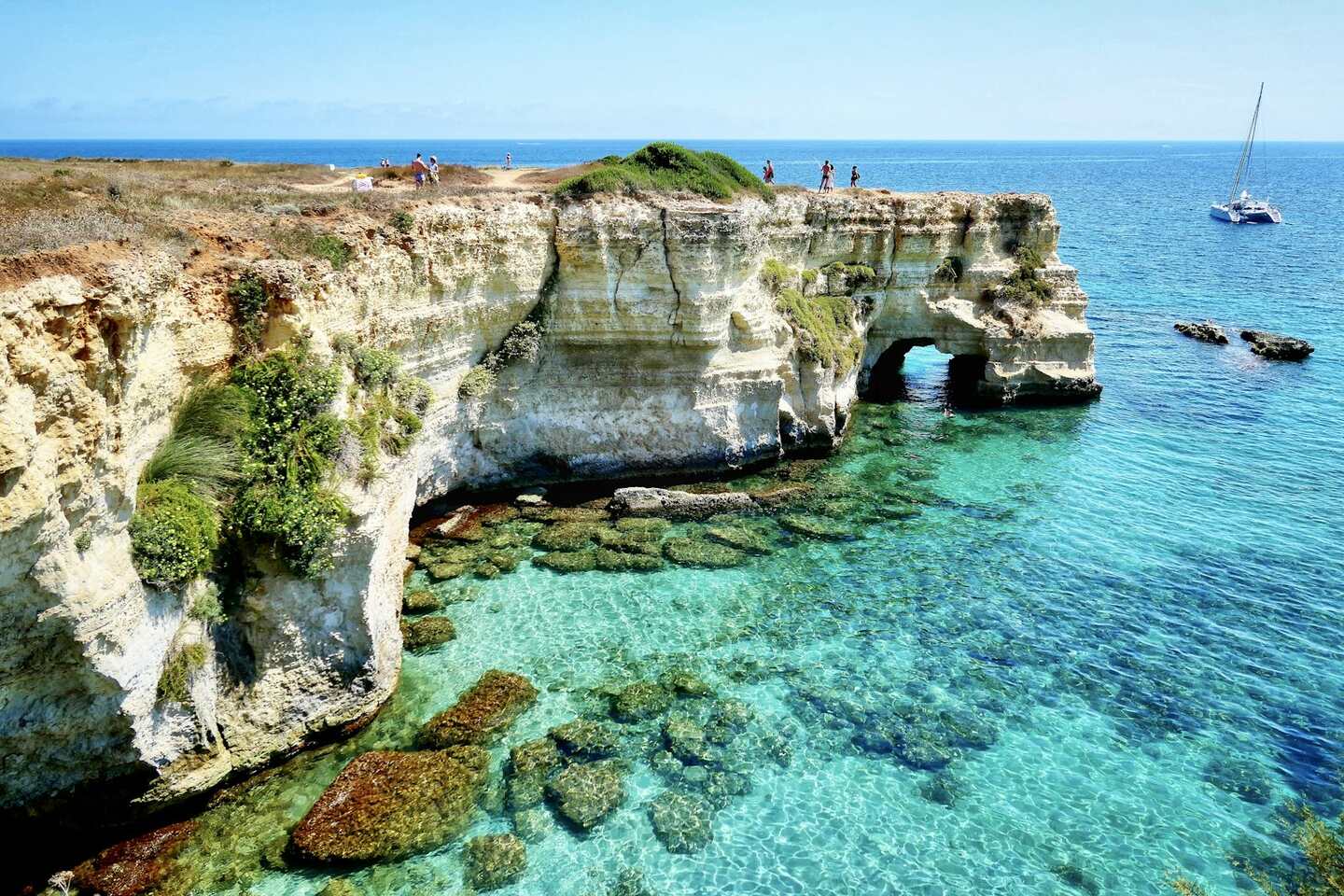
One day we took the early bus out to Torre dell’Orso and walked the cliffs to Torre Sant’Andrea, a couple of hours at the pace of people who stop for every rock. The limestone is white, the water is that clear pale green, and the sea was sixteen degrees. Jonas got in for four seconds. Half the places on the coast were closed until May, including the one we had planned to eat at, so lunch was bread and cheese on a rock.
The olive trees
What we did not expect was the olive trees. Along the road to the coast whole groves are dead, grey and bare, some of them centuries old. It is a bacterium called Xylella. People tell you the name of the disease and look at the field. Here and there someone has planted young trees between the dead ones. It has changed the way the landscape looks, and it is the part of this trip that has stayed with us.