Slovenia
A slow week on the Soča: Slovenia by train, bus and river path
Turquoise river, cold water, a museum that takes a whole afternoon, and a valley that is easier without a car than it looks.
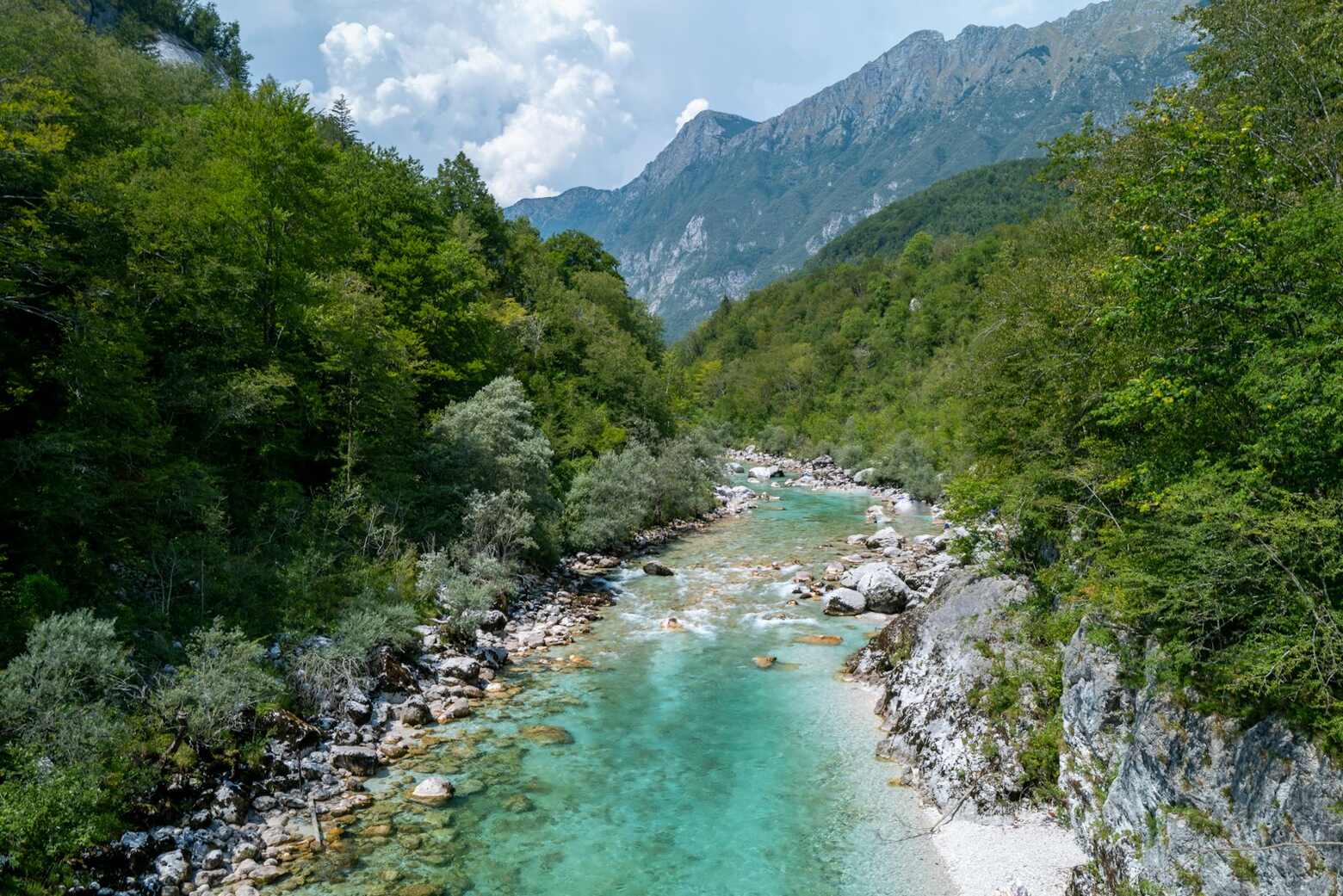
In the last week of September we took the train from Ljubljana to the Soča valley, the part of Slovenia that appears on calendars. It does not need our help. The river is a colour neither of us has a word for, somewhere between bottle glass and toothpaste, and it is also about eleven degrees, which is why the people in it wear wetsuits.
This was our most recent trip and the one we planned least. We had eight days, no fixed bookings after the second night, and a vague idea of walking along the river for as long as it was pleasant. It mostly was. What follows is longer than usual, because people keep asking us how to do the valley without a car, and the honest answer has a lot of small parts.
Getting there
Getting there is half the point. Ljubljana to Jesenice is an ordinary regional train through suburbs and then farmland, a little over an hour. At Jesenice you change for the Bohinj line, which is anything but ordinary: it was built before the First World War to connect Austria with the sea at Trieste, and it climbs to Bohinjska Bistrica, goes through a six-kilometre tunnel under the mountains, and comes out on the other side above the Bača gorge. The last stretch down to Most na Soči took forty minutes and cost about €6. There are only a handful of trains a day on this part of the line, and the SŽ timetable is the one to trust; the printed one at Jesenice was a season out of date.
From Most na Soči a bus runs up the valley to Tolmin, Kobarid and Bovec, five or six on a weekday, and the driver sells you the ticket. Kobarid was about forty minutes and €4. The bus stop at Most na Soči is a short walk down from the station, across the road from a lake that is really the river held back by a dam, and we watched swans on it for the twenty minutes until the bus came.
Kobarid
We stayed five nights in Kobarid in an apartment over a bakery, €68 a night, with a kitchen we used twice. The smell of the ovens started around five in the morning and made it hard to be annoyed about the hour. A macchiato in the café on the square was €1.60. For lunch we ate frika, a pan of potato and cheese fried until crisp at the edges, for €9, and walnut štruklji, a rolled pastry, for €6. Kobarid is small enough that by the third day the waiter knew our order and by the fourth he had opinions about it.
The town sits on a flat bit of the valley with the river on one side and Mount Krn on the other. When the cloud lifts off Krn it looks painted on. When it does not, which was two of our five days, the whole valley closes like a lid and it rains steadily, without drama, for the entire day. We read in the café, which sold us a second coffee for €1.20 without comment, and a third with a slight raising of the eyebrows.
The museum
The Kobarid Museum is about the Isonzo front of the First World War, which ran straight up this valley for two and a half years. It is excellent and heavy. It cost €8 and took us three hours, longer than we had planned, mostly because of the rooms of letters and photographs of ordinary soldiers from a dozen countries, many of whom had never seen mountains before they were sent to fight in them. There is a large relief model of the valley that makes sense of everything you see out of the bus window afterwards: the trenches on the ridges, the roads that were built for guns, the reason the villages were rebuilt in the twenties.
Afterwards we sat by the river without talking for a while. If you go, go on a rainy day and give it the afternoon. There is a walking route from the town up to the Italian ossuary on the hill and on to old trenches and a gorge, signposted from the square, which we did the next morning and which put the museum into the landscape.
Walking the river
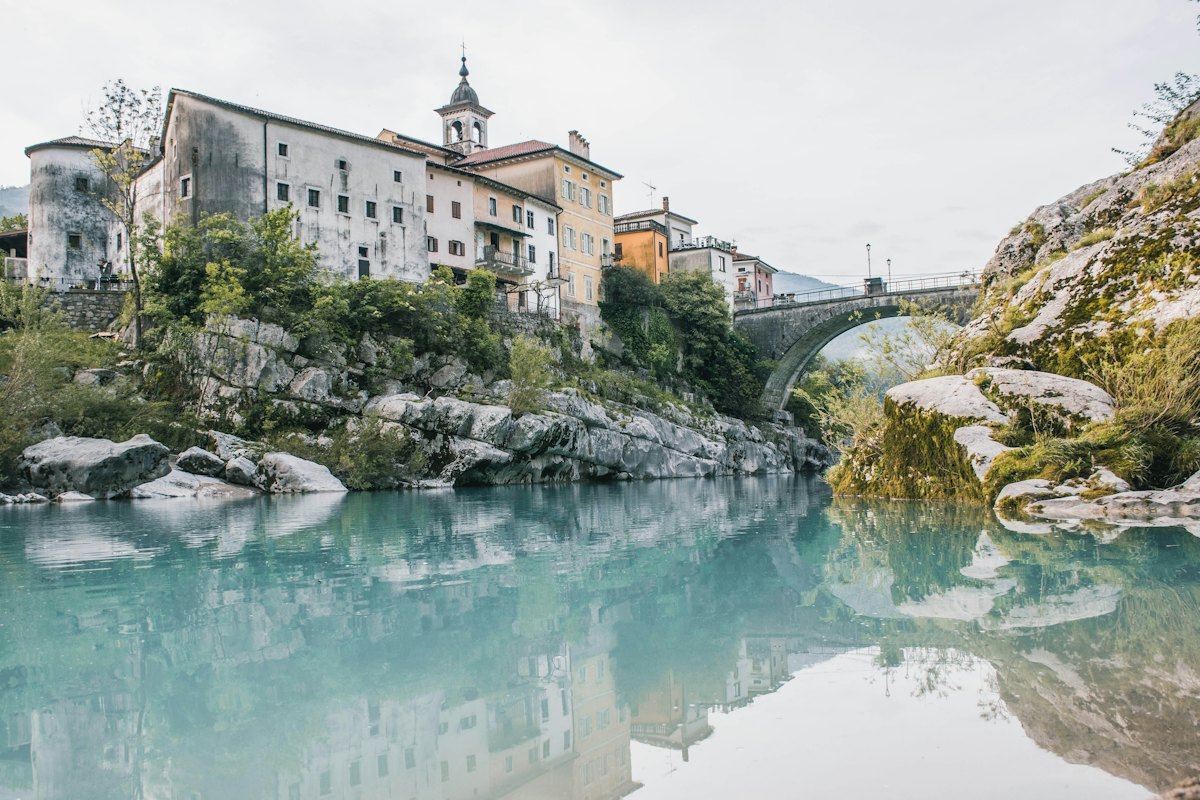
The path to the Kozjak waterfall is forty minutes each way from Kobarid, through a gorge with wooden walkways and a small fee at the gate. The waterfall itself sits in a round, dark chamber of rock, and you hear it a long time before you see it. The Napoleon Bridge, half an hour upstream, is pretty and not very dramatic, and has nothing to do with Napoleon beyond the fact that his army once crossed an earlier bridge here.
The long day was the Soča trail from Kobarid down towards Tolmin, which follows the river through woods and meadows, past swimming spots, little shrines and a farm that sold apple juice from a fridge with an honesty box. It is well marked and mostly flat. We did not finish it. Somewhere after the fourth hour, Marta announced that she had seen enough beautiful water for one day, and we walked up to the road and took the bus for the last stretch.
Tolmin itself is a quiet town with good bakeries and a gorge of its own at the confluence of two rivers, where the water is even colder and the bridges are higher. We spent half a day there and caught the bus back to Kobarid in the late afternoon, sharing it with schoolchildren and one man carrying a chainsaw in a sack.
Cold water
Do not believe anyone who says the Soča is swimmable in late September. A man in a wetsuit waved at us from a rock and we declined. We went in up to the knees, for the principle of it, and came out with feet we could not feel. The water is that colour because it is cold and runs over pale limestone, which is explained on an information board at almost every bridge.
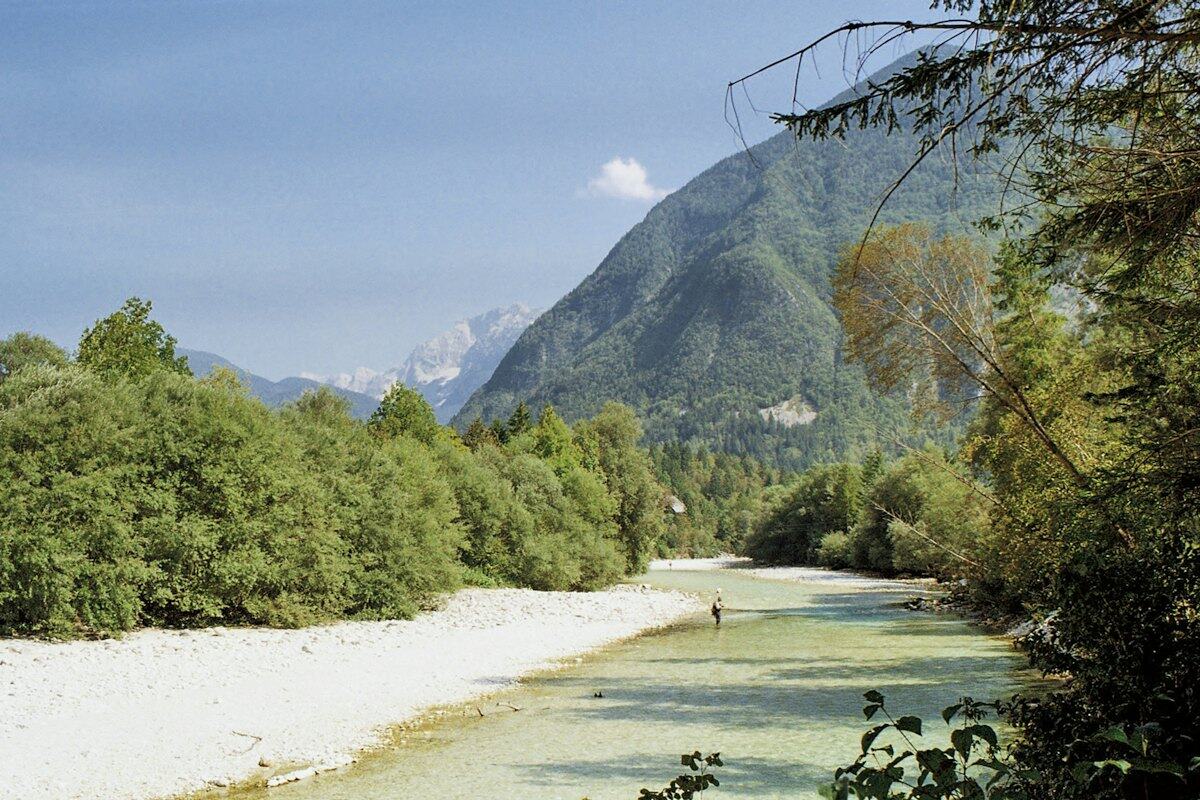
The people who do go into the river are rafters, kayakers and fly fishermen, in roughly that order of noise. The fishermen stand very still in the shallows above Bovec for hours, and are the only people in the valley who look completely content.
Bovec and the top of the valley
For the last two nights we moved up to Bovec, which is busier and more outdoorsy than Kobarid, with a rafting shop in every second building. We paid €62 for a room in a guesthouse at the edge of the village, with a view straight up at the mountains and a host who left us a bottle of her own schnapps. Every shop in Bovec sells the same rafting trip; in late September there was no queue, but we were told that in August there is one.
From Bovec we walked up towards the source of the river, partly by path and partly by a summer bus that was running its last week of the season. Near the top the Soča is a narrow, loud stream in a rock gully, and the path ends at a ladder and a cable where the water comes out of the mountain. We went up halfway, which was enough.
The narrow road to Bovec is one of two things we did not enjoy: drivers overtake on bends and nobody walks on it for pleasure. The other one is the Sunday timetable. The last bus from Kobarid towards the train on a Sunday leaves at four, and the trains from Most na Soči are thin all week, so plan the day you leave around them rather than the other way round.
We left on a Monday morning, on the bus to Most na Soči and the train back through the tunnel, with a bag of štruklji from the bakery and two pairs of boots that had not quite dried. It was the best week we have had in the mountains, and the easiest, and we have already started talking about going back in June.