Greece
Western Crete by bus and on foot
A week between Chania and the south coast with a KTEL timetable, a pair of sandals that did not survive, and one very large lunch.
We flew into Chania on a Tuesday in May with one rule: no rental car. Crete is a big island, and the bus network looks, on paper, like something drawn by a person who kept being interrupted. In practice it works better than that, as long as you accept that “every hour” means roughly every hour.
Chania old town for three nights, in a room with a bathroom the size of a wardrobe, €68 a night, breakfast not included. The long-distance buses leave from the KTEL station on Kydonias street, ten minutes on foot from the harbour. You buy the ticket at the counter, not from the driver, and the timetable on the KTEL website was out of date twice, so we got into the habit of asking at the window the evening before.
Kissamos and the boat
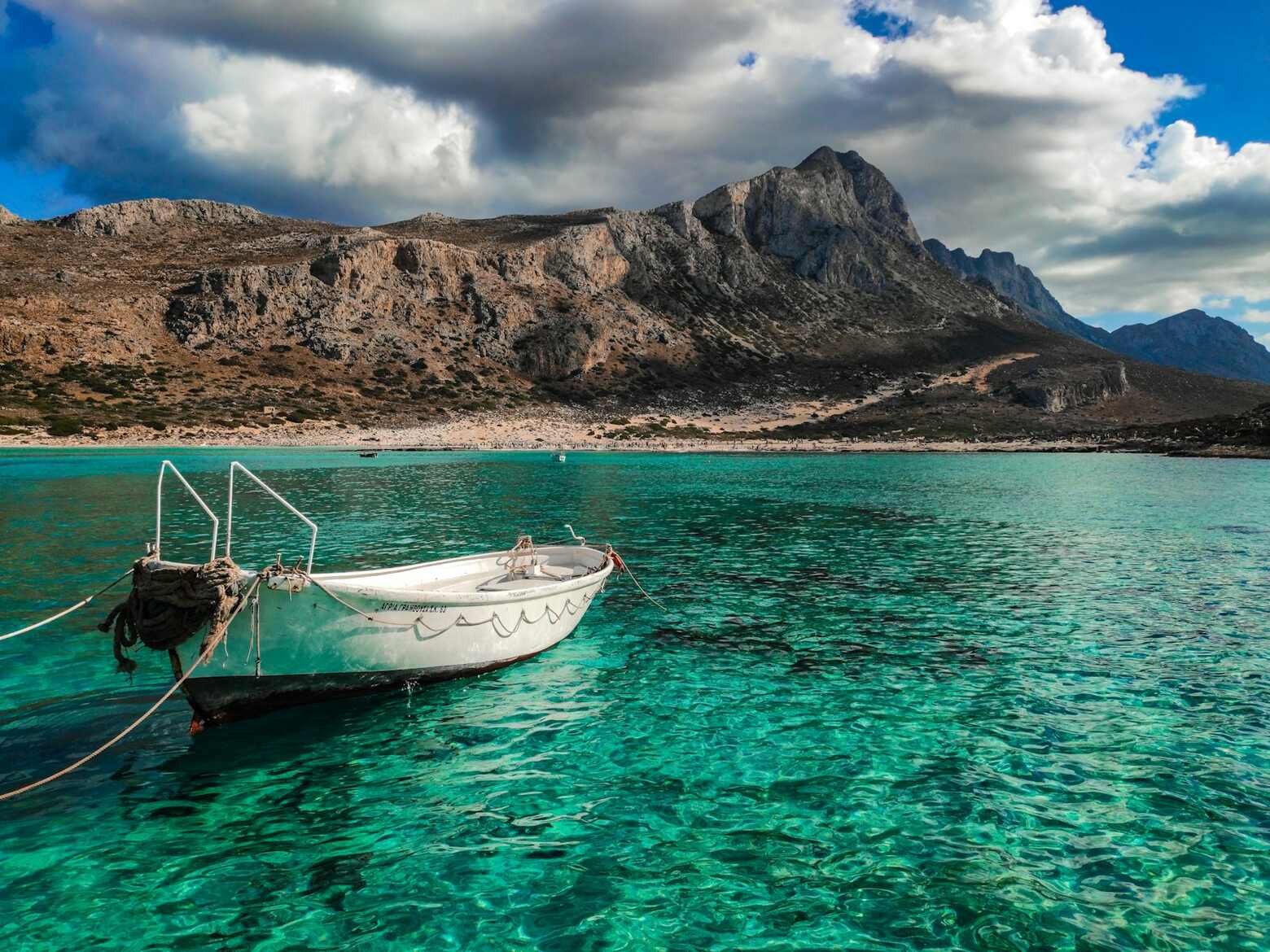
The bus to Kissamos takes about fifty minutes and cost €6.30 each. From the port a boat goes out to Gramvousa and the Balos lagoon, thirty-something euros return, and in the second week of May it was half empty. The lagoon is as pale as every picture of it. What the pictures leave out is the wind, which pushed the boat sideways for twenty minutes and made Marta sorry about breakfast. We got three hours on the sand and two red noses.
The south coast, slowly
Chania to Paleochora is two hours and €8.60 on a road that makes you put the book down and look. We stayed four nights in a family studio above a taverna, €45 a night, the owner’s mother watching the street from the balcony. A Greek coffee in the square was €2. A freddo espresso on the beach was €3.50, and we learned which side of the street to sit on.
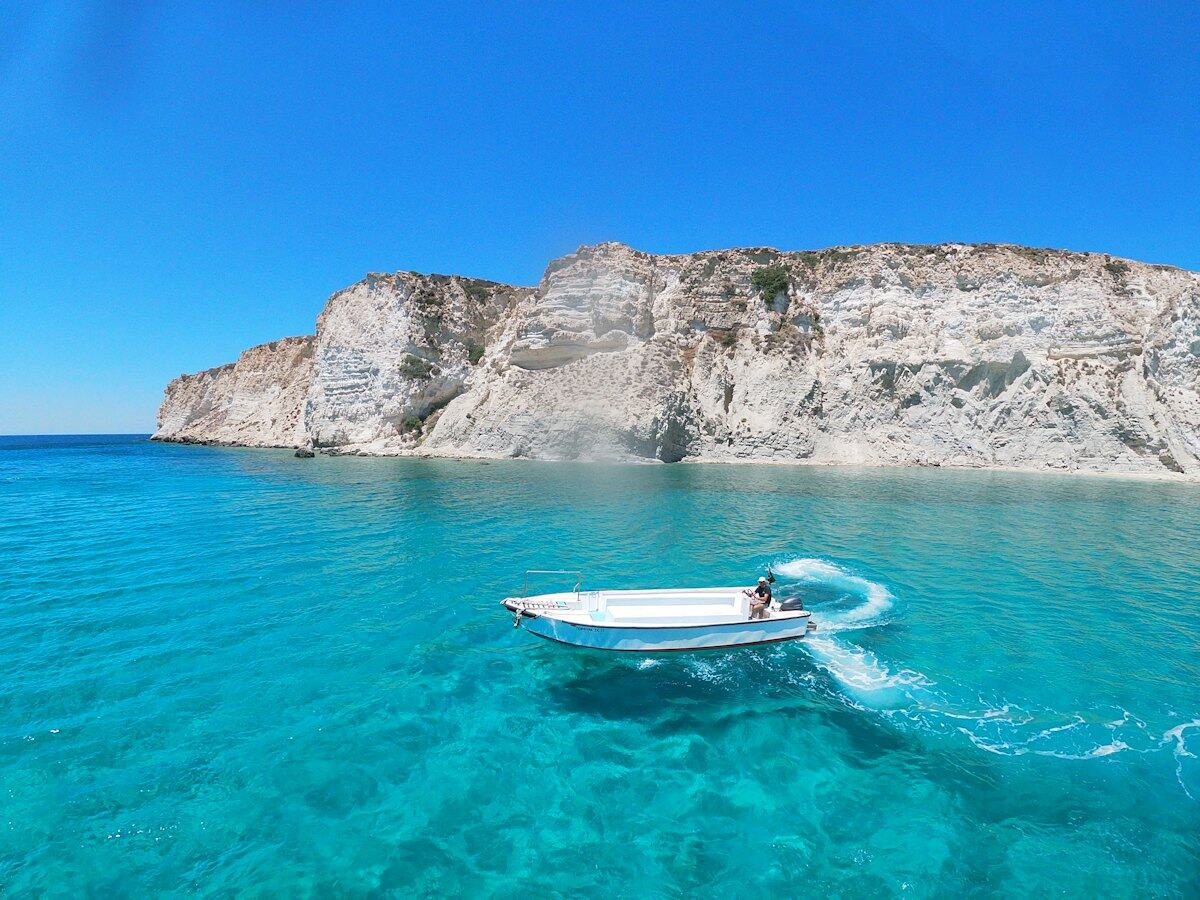
From Paleochora a small boat runs along the coast to Sougia, a bit under an hour and about €10. Sougia is a pebble beach, six tavernas and a bakery that sells out of tiropita by ten. One morning we walked to Lissos, the ruins of an old sanctuary in a dry little valley, ninety minutes each way on a stony path with no water and almost no shade. We took one bottle each and drank both before the ruins. Take two.
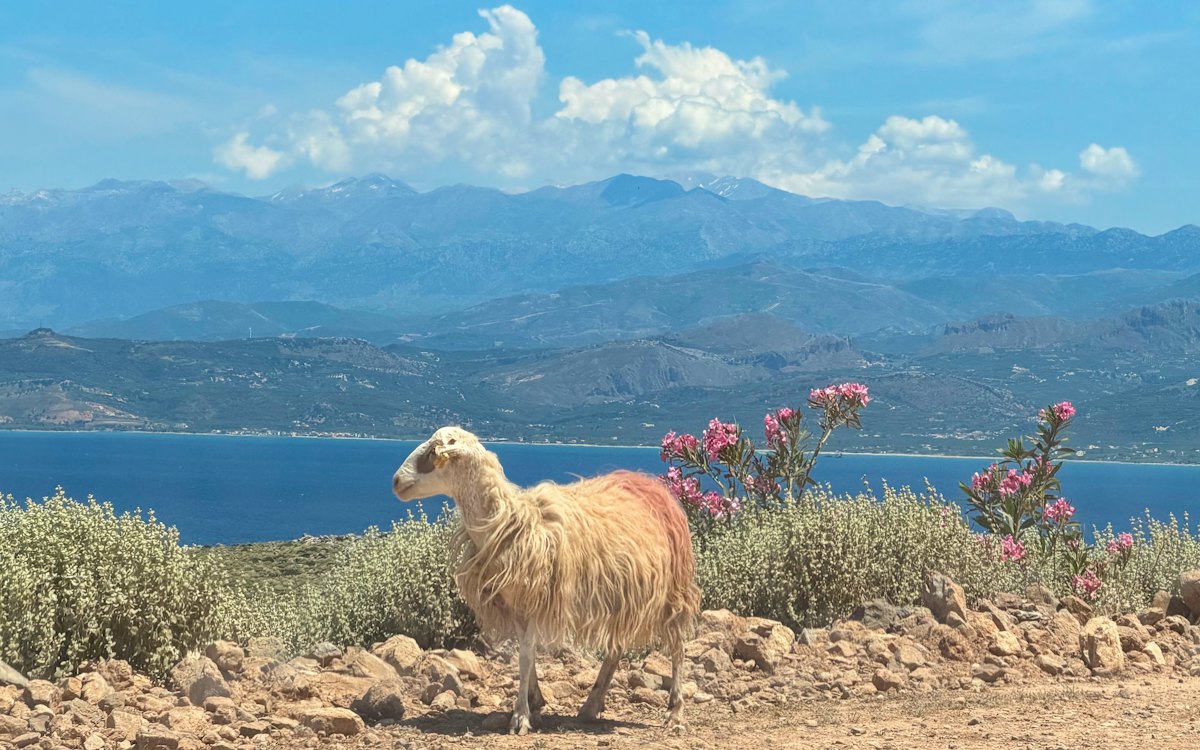
Another day we shared a taxi (€25 between four, with a couple we met at the bakery) to the top of the Agia Irini gorge and walked down to Sougia, nine kilometres, mostly downhill, with the stream still running in May. It was the best day of the trip. There was nobody else in the gorge except two goats and a man repairing a fence.
What we did not like
We skipped the Samaria gorge on purpose: without a car you join the organised buses that leave Chania before seven, and the woman at the KTEL window said it would be busy even in May. Some of the buses take cash only, which the timetable does not mention. Jonas’s sandals lasted four days on the Lissos path and were left, with some ceremony, in the bin behind the bakery.
We also learned that “a small portion” is not a phrase anyone here takes seriously. One order of fried zucchini fed both of us, and a second plate of something we had not ordered arrived at the end, with raki. We left on the Tuesday bus feeling very well looked after and slightly overfed.